The quick answer
A business waste audit looks at what you throw away, the bins and collections you have, what you pay and whether your paperwork meets the rules, then shows you how to cut the cost and recycle more. What it costs depends on who does it. At National Waste Solutions it's free, with no obligation.
Most businesses set up their waste once and never look at it again. The bins that arrived with the first contract are still there, collected on the same days, at a price that has crept up every year. Nobody checks whether the bins are full when they are emptied, whether the recycling is really being recycled, or whether the paperwork would stand up if someone asked for it.
A waste audit is that check. It is the simplest way to find out whether you are paying for capacity you don't use, whether you are meeting your legal duties, and what a better setup would look like for your premises. Here's what a good audit covers, what you should get back, and what it costs.
What a business waste audit checks
A proper audit looks at your waste the way it actually happens on your site, not the way the contract says it should. It covers:
- What you throw away: each waste stream (general, recycling, food, glass, cardboard and anything specialist) and roughly how much of each.
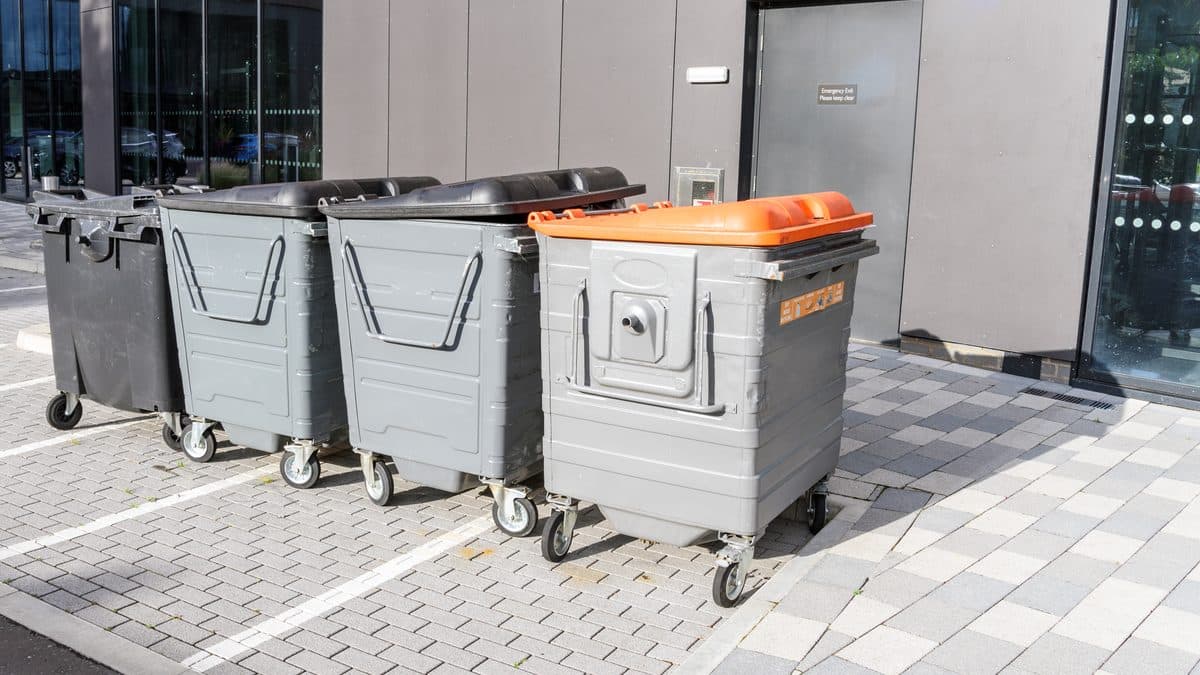
- Your bins: how many, what sizes, and how full they are when they are emptied.
- Your collections: how often each bin is emptied, and whether that matches what you produce.
- What you pay: lift charges, bin rental and the surcharges buried in the invoice.
- Your contract: how long it runs, the notice period and whether it renews automatically.
- Your paperwork: waste transfer notes, and whether the people taking your waste are registered to do it.
- How waste is handled on site: where the bins sit, whether recycling is getting mixed with general waste, and what your team finds awkward.
The paperwork side: your duty of care
Every business has a legal duty of care for the waste it produces. Under the government's guidance for England, that means sorting and storing waste safely and securely, checking that whoever collects it is a registered waste carrier, and completing a waste transfer note for waste that leaves your premises. Regular collections can be covered by a single 'season ticket' note, and transfer notes for non-hazardous waste must be kept for at least two years.
An audit checks that all of this is in place and that the paperwork you hold matches the waste you actually produce. It is an easy thing to let slip, and an easy one to put right.
The new recycling rules an audit should cover
Since 31 March 2025, the Simpler Recycling rules have required workplaces in England with 10 or more full-time-equivalent employees to keep three things apart: dry recyclables (plastic, metal, glass, paper and card), food waste, and general (residual) waste. Businesses with fewer than 10 employees have until 31 March 2027. Paper and card should normally be collected separately from plastic, metal and glass, unless the collector has a written assessment showing that isn't practicable.
A good audit tells you which side of those dates you are on, whether your current bins and collections meet the rules, and what needs to change. For many businesses, getting recycling out of the general bin also lowers the bill.
What you get back after an audit
An audit is only useful if it ends in something you can act on. You should come away with:
- A clear, per-premises quote, built on what you actually produce rather than a one-size-fits-all rate.
- Bins and collection frequency matched to your real volumes, so you stop paying to empty half-full bins.
- Practical recommendations to cut your volume, improve your recycling rate and tidy up day-to-day handling.
- The right licensed operator for each waste stream.
- Paperwork you know is in order.
- An honest view of your current deal, even if the answer is that it's already a good one.
How much does a business waste audit cost?
It depends on who does it. Some providers and consultants charge for a detailed audit, so it's worth asking before you book one.
At National Waste Solutions, the audit is free and there's no obligation. It's how we work out the right service and the right price for your premises, so it's simply the first step. If we find that your current setup is already a fair deal, we will tell you and leave it there.
How to get ready for a waste audit
You don't need to prepare much, but a few things make the audit quicker and the result more accurate:
- Your last few waste invoices, for every provider you use.
- Your current contract or agreement, so we can check the notice period and any auto-renewal.
- A rough idea of what you throw away in a normal week, and how that changes through the year.
- Any waste transfer notes you hold.
- If you have more than one site, a list of them. We audit multi-site businesses as one account.
Book your free waste audit
We are a Devon-based team, covering businesses across Devon and Cornwall and multi-site operators nationwide. We coordinate licensed operators for every waste stream, consolidate it into one managed service and one invoice, and stay accountable for it. Send us a few details and we'll arrange your free, no-obligation waste audit.

Written by
The National Waste Solutions team
We are based in Okehampton and manage commercial waste for businesses across Devon, Cornwall and nationwide, through licensed operators and with one point of contact.
How we work