The quick answer
There's no fixed price. Your bill depends on bin size, collection frequency, waste type, volume and contract terms — so the only accurate number comes from a per-premises waste audit.
It's the first question almost every business asks — and the honest answer is that there's no single price for commercial waste collection in the UK. What you pay depends on your bins, your waste, how often it's collected and where you are. Two businesses on the same street can pay very different amounts, for good reasons.
That doesn't mean pricing is a mystery. Once you understand the handful of factors behind every quote, you can read a bill properly, spot where you're overpaying, and know whether you're getting a fair deal. Here's how commercial waste pricing actually works in 2026 — and how to bring your costs down.
What drives the cost of commercial waste collection
Every commercial waste quote is built from the same core ingredients. The more you understand them, the easier it is to compare providers like for like:
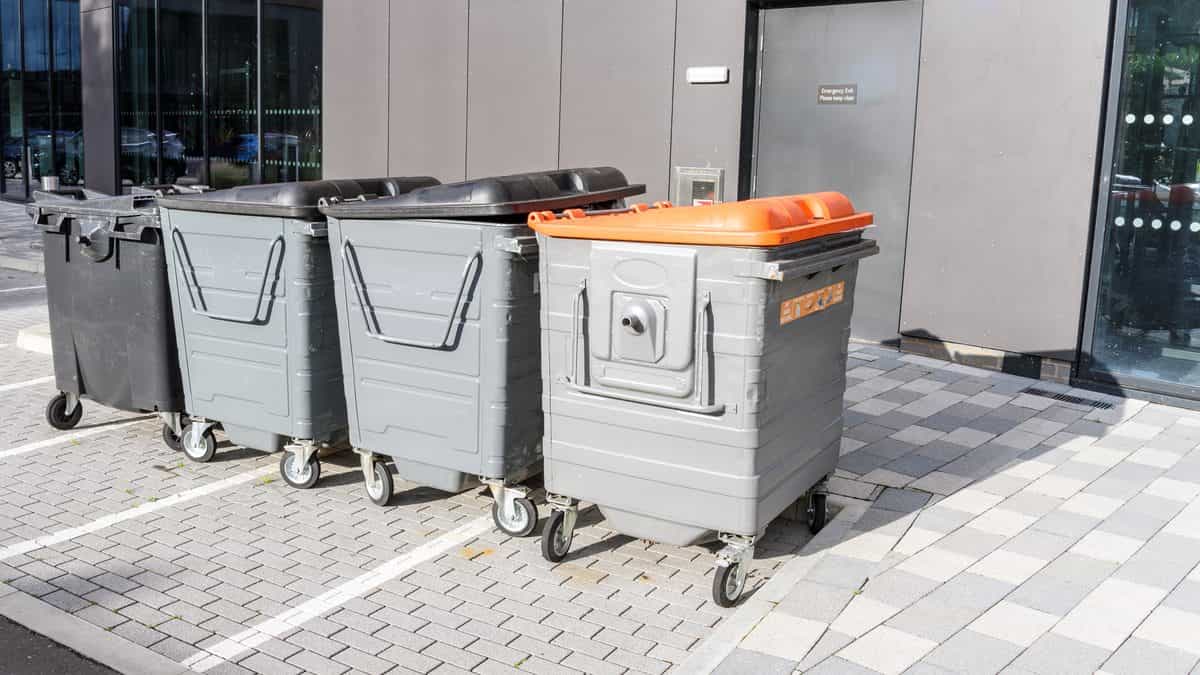
- Bin size and number of bins — a 240-litre wheelie bin costs far less to service than a 1,100-litre bin or a front-end loader.
- Collection frequency — weekly, fortnightly or several times a week. Frequency is often the single biggest lever on your bill.
- Waste type — general (non-recyclable) waste usually costs more than dry mixed recycling, while food, glass, clinical and hazardous waste are priced separately.
- Volume and weight — heavier or overfull bins can attract excess-weight charges on top of the standard lift.
- Location and access — rural sites, restricted access or timed city-centre collections can add cost.
- Contract length and terms — longer agreements sometimes unlock better rates, but can lock in price rises too.
See also:Commercial waste in Exeter Commercial waste in Plymouth Commercial waste collection, managed for you
The charges that make up a commercial waste bill
A commercial waste invoice is rarely a single figure. Knowing the components stops you being caught out by 'extras':
- Lift / collection charge — the core cost of emptying each bin, each time.
- Bin rental — many providers charge a monthly rental for the container itself.
- Duty of care / transfer — a legal requirement (more below); some providers itemise it, some fold it in.
- Excess weight or contamination — charged if a bin is overloaded, or if the wrong waste ends up in a recycling bin.
- Environmental and carbon levies — administrative or 'green' surcharges that vary widely between providers.
Bin sizes — and right-sizing to save money
Matching your bins to what you actually produce is one of the quickest ways to control cost. As a rough guide:
- 240L wheelie bin — small offices, shops and cafés with modest waste.
- 660L / 1,100L bin — busier retail, hospitality and light-industrial sites.
- Front-end loader (FEL) or roll-on/roll-off (RORO) — high-volume manufacturing, distribution and construction.
How to reduce your commercial waste costs
Most businesses are paying more than they need to. The biggest savings usually come from:
- Right-sizing — matching bin size and collection frequency to your real volumes.
- Segregating recycling — getting more recycling out of the general-waste bin usually means a lower overall bill and better compliance.
- Consolidating suppliers — one managed account across all your waste streams (and sites) beats juggling separate contracts.
- Reviewing regularly — waste needs change; a setup that fit two years ago may be costing you now.
The only way to get your real number: a waste audit
Because pricing depends entirely on your premises, the only way to know what your business should be paying is to have your setup reviewed. A waste audit looks at your current bins, volumes, streams, frequency and spend, and comes back with a clear, per-premises quote — no guesswork, no one-size-fits-all rate.
At National Waste Solutions we do this as a free, no-obligation waste audit. We coordinate the right licensed operators for each of your waste streams, consolidate it into one managed service and one invoice, and tell you honestly where the savings are — even if that means telling you your current setup is already a good deal.

Written by
The National Waste Solutions team
We are based in Okehampton and manage commercial waste for businesses across Devon, Cornwall and nationwide, through licensed operators and with one point of contact.
How we work